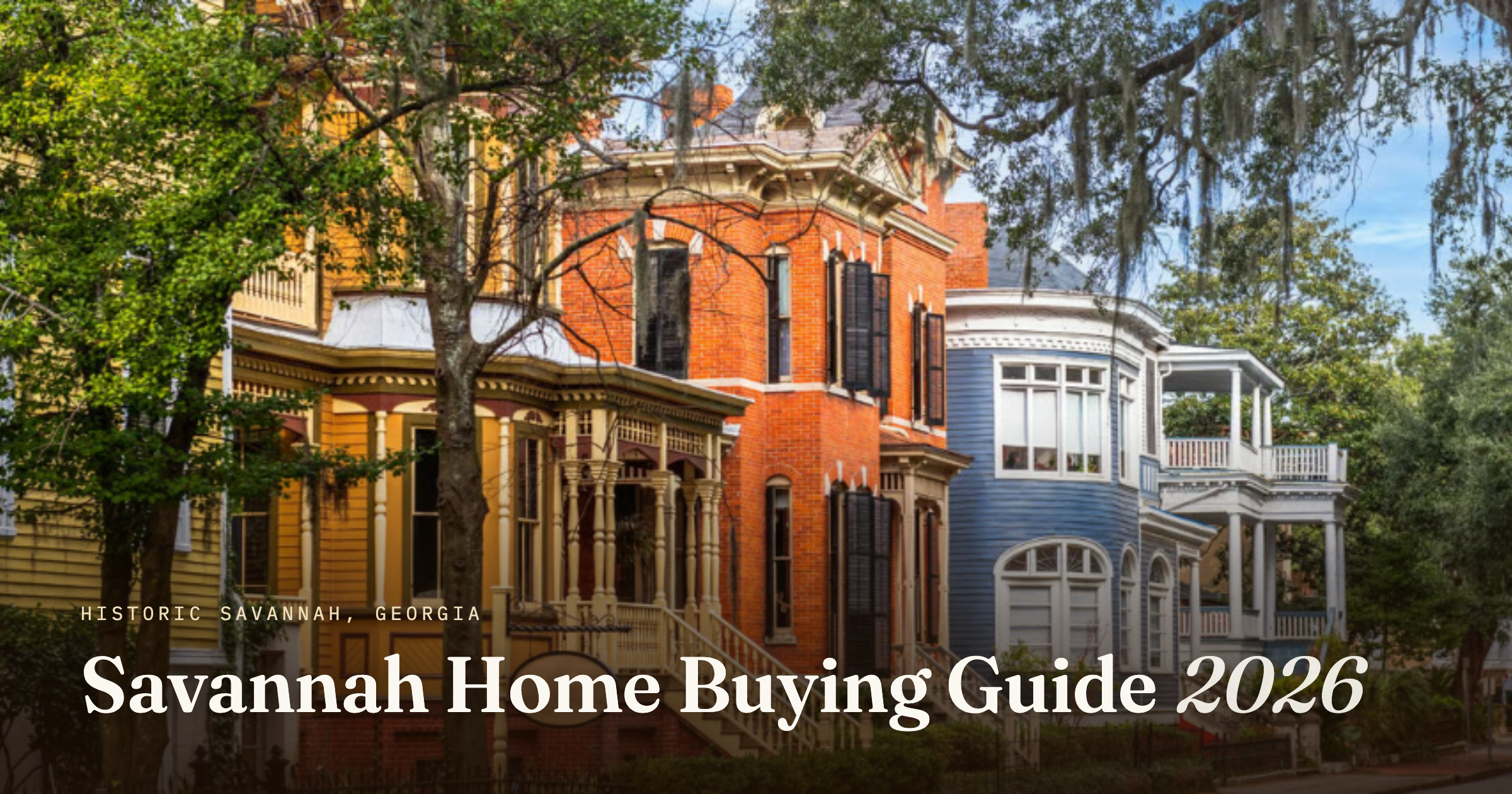
Savannah Home Buying Guide | 2026
By Lazaro Cocho
So you're thinking about buying a home in Savannah, GA. Good call. Between the moss-draped oaks, the historic squares, and the coastal breeze, it's easy to see why so many people are moving here in 2026. But here's the thing:
buying a home in Savannah isn't quite like buying a home anywhere else. You've got flood zones to think about, historic district rules, a hot and humid climate that's tough on houses, and some local down payment programs most buyers never even hear about. This Savannah home buying guide walks you through the whole process, step by step, soyou know exactly what to expect before you start touring homes. Let's get into it.
Start With Lifestyle, Not Just the Listing
Before you fall in love with a kitchen island, stop and think about your actual daily life. Where do you work? How do you spend your weekends? Do you want to walk to coffee shops and restaurants, or would you rather have a big backyard and some peace and quiet? There's no "best" answer here. Some buyers want historic charm and city energy in downtown Savannah. Others want more space out in Effingham County. Neither one is wrong, it just depends on what fits your life. Figure this out first, and the rest of your home search gets a whole lot easier.
Know the Neighborhoods (and the Areas Around Them)
Savannah real estate covers a lot of ground, and each area has its own personality:
- Savannah (Historic Downtown, Midtown, Ardsley Park): Historic homes, cobblestone streets, walkability, and character. Great if you want culture, restaurants, and established neighborhoods close by.
- Pooler: Newer construction, shopping, airport access, and a more suburban feel, while still staying close to the city.
- Richmond Hill: A residential vibe with room to grow, part of Bryan County, and a nice mix of established and new neighborhoods.
- Wilmington Island: Coastal living without going all the way out to the beach. Marsh views, boating access, and easy reach to Tybee Island. Just know that homes here run pricier. The average value on the island was over $448,000 as of early 2026, well above Savannah's citywide average.
- Guyton and Effingham County: More space and a quieter pace, often at a lower price point than Chatham County.
- Garden City and Port Wentworth: Solid options if affordability and easy commutes are your top priorities.Take a drive through a few of these areas at different times of day. A neighborhood that feels peaceful on a Saturday afternoon might feel totally different on a Tuesday at rush hour.
Why County Choice Matters
Here's something a lot of buyers overlook: it's not just about the city or neighborhood, it's about the county. Chatham, Bryan, and Effingham counties all have different property tax rates (called millage rates), different growth patterns, and different home styles. That means two homes priced the same can end up costing very different amounts every month once property taxes are factored in. Before you fall for a house, check what county it's in and what the local tax rate looks like.
Get Your Financial Foundation in Order First
The smoothest Savannah home purchases almost always start with buyers who did their financial homework before they started house hunting. Do this 8 to 12 weeks before you plan to search:
- Pull your credit reports from all three bureaus at annualcreditreport.com and check for errors
- Know your credit score and how it stacks up against loan minimums (580 for FHA, 620 for conventional, 640 for USDA and Georgia Dream)
- Calculate your debt-to-income ratio — lenders generally want it under 43–45%
- Pay down credit card balances below 30% of your limit (ideally under 10%)
- Don't open new credit accounts or make big undocumented deposits for at least 90 days before applying for a mortgage
And don't sleep on down payment assistance. Savannah has two solid programs worth researching:
- DreamMaker (City of Savannah): up to $7,500, sometimes up to $50,000 in redevelopment areas, for buyers purchasing within city limits
- Georgia Dream: $10,000 standard, or $12,500 if you're a public employee, nurse, veteran, or educator
These two can actually be stacked for qualifying city-limit buyers — which can cover your entire down payment plus a chunk of closing costs. Just make sure your lender has actually closed deals using both programs, not just heard of them.
Get Pre-Approved (Not Just Pre-Qualified)
Big difference here. Pre-qualification is a quick guess based on what you tell the lender. Pre-approval means the lender actually verifies your income, assets, and credit — and it's what sellers in Savannah's market take seriously.Have these documents ready:
- Two years of tax returns
- Two recent pay stubs
- Two months of bank statements
- Photo ID and Social Security number
- Current mortgage statement, if you have one
Shop around with two or three lenders. Rates and program knowledge vary more than you'd think, especially when it comes to programs like DreamMaker and Georgia Dream.
Look Beyond the Purchase Price
The sticker price is just one piece of the puzzle. A $375,000 home in one part of Savannah might cost noticeably more (or less) per month than a $375,000 home somewhere else, once you factor in:
- Property taxes
- Homeowners insurance
- Flood insurance (if applicable)
- HOA dues
- Utilities
- Commute costs
Always run the full monthly cost, not just the mortgage payment, before you decide a home fits your budget.
Think About Insurance and Flood Zones
Savannah sits right along the coast, so insurance isn't a small detail — it's a real budget line item. Before you make an offer:
- Check the property's flood zone at msc.fema.gov
- Get insurance quotes early, not after you're already under contract
- Remember that standard homeowners insurance does not cover flood damage — you'd need a separate policy
- Budget $800–$3,000+ per year for flood insurance if the home needs it
This doesn't mean you should avoid coastal or low-lying properties — it just means you need to know the real cost before you fall in love with the house.
Consider Historic Preservation Rules
If you're eyeing a home in Savannah's Historic District, you're also signing up for some extra homework. Many of these homes fall under preservation guidelines, so any exterior changes typically need a Certificate of Appropriateness (COA) from the MetropolitanPlanning Commission. Ask whether the home is a "contributing" or "non-contributing" structure, that status affects what renovations you can (and can't) do down the road.
Plan for Savannah's Climate
Hot, humid summers and mild winters sound great until they start affecting your house. Look for solid insulation, a reliable AC system, and pest control measures already in place. Older homes especially need a close look at moisture control, since humidity and wood don't always mix well in coastal Georgia.
Making an Offer: What You Need to Know
An offer in Georgia is a legal contract, not just a friendly opening bid, so read everything carefully before you sign. A few things to nail down:
- Earnest money: typically 1–3% of the purchase price. Higher earnest money can make your offer more competitive
- Due diligence period: usually 10–14 days in Savannah's market — this is your window to inspect and walk away for any reason with out losing your earnest money
- Contingencies: financing, appraisal, and inspection contingencies each protect you in a different way. If you're asked to waive one in a competitive situation, make sure you fully understand what you're giving up before you do
Get a Home Inspection (a Good One)
Don't skip this, no matter how perfect the house looks. Savannah's older housing stock in particular can hide some real surprises. Make sure your inspection covers:
- Termite damage and activity (get a separate termite inspector — this is a big deal in coastal Georgia)
- HVAC condition and age
- Roof condition
- Wood rot on porches, trim, and window frames
- Crawl space moisture
- Electrical panel age and capacity
If the home was ever a short-term rental, know that the STVR certificate doesn't transfer to you, you'd need to apply for your own within six months of closing.
Appraisal and Financing Lock
Once your due diligence is done and you're moving forward, your lender orders the appraisal. A few notes:
- Lock your rate once you're confident you're proceeding.
- Respond fast to any underwriter requests delays here are the #1 cause of closing delays
- Historic District appraisals can take 10–15 business days (versus 5–7 for standard homes), so plan accordingly
- If you're buying historic, ask your lender to request an appraiser who actually knows the Historic District — general appraisers sometimes undervalue these homes
Compare Commute and Convenience
Drive the route to work at the time you'd actually be driving it — not just on a quiet Sunday. Also think about how close you'll be to grocery stores, gyms, medical care, and the everyday errands that make up your week. A home that "looks" convenient on a map can feel very different once you're actually living there.
Resale vs. New Construction — and How Much Maintenance You Want
Both are solid choices, just with different trade-offs:
- Resale homes often come with mature landscaping, established neighborhoods, and more character — but check the age of the roof, HV AC, and other big systems closely
- New construction offers modern layouts and warranties, but still do your homework on the builder's reputation and future development plans nearby
And be honest with yourself about maintenance. Older homes need more attention (roofing, plumbing, electrical, drainage). Newer homes and townhomes typically need less, but townhomes and condos often come with HOA dues and rules.
Understand the Closing Process in Georgia
Georgia is an "attorney state," meaning a licensed attorney has to handle your closing, you can't skip this step. Expect closing costs of about 2–5% of the purchase price, covering things like:
- Loan origination fees
- Appraisal fees
- Title search and insurance
- Attorney fees
- Recording fees
- Prepaid insurance and taxes
On a $340,000 home, that typically adds up to $6,800–$17,000 or more, on top of your down payment.
One big warning: wire fraud targeting real estate closings is a real and growing problem. Never wire your closing funds based on emailed instructions alone — always call yourclosing attorney directly, using a phone number you looked up yourself, to confirm wiring details before sending anything.
After Closing: Your First 30–90 Days
The process doesn't end when you get the keys. A few things to knock out early:
- Change the locks on every exterior door
- Update your address with USPS, your bank, and your insurance company
- File for your homestead exemption by April 1 with the Chatham County Board of Assessors. This lowers your property tax bill, and missing the deadline means waiting until next year
- Set up automatic mortgage payments so you never miss one by accident
- Budget 1–2% of your home's value each year for maintenance
Work With a Local Real Estate Agent
You can read every guide on the internet (including this one), but nothing replaces someone who knows Savannah's streets, neighborhoods, and market shifts firsthand. A good local agent can help you compare not just homes, but lifestyle fit, pricing trends, and resale value - the kind of local knowledge that doesn't show up in an online listing.
Frequently Asked Questions About Buying a Home in Savannah
How long does it take to buy a home in Savannah, GA?
A: From accepted offer to closing, plan on 30–45 days for conventional financing, 45–60 days for FHA or V A loans, and 60–75 days if you're using down payment assistance programs like DreamMaker or Georgia Dream. Add in the prep work beforehand (credit review, pre-approval, saving up), and most buyers are looking at 3–6 months total from start to keys-in-hand.
What credit score do I need to buy a home in Savannah?
A: It depends on the loan type:580 for FHA (3.5% down), around 620–640 for V A, 640 for USDA and Georgia Dream, and 620 minimum for conventional (680+ gets you better rates). The higher your score, the lower your rate — which adds up to real savings over 30 years.
What down payment assistance is available in Savannah?
A: The two big ones are DreamMaker (City of Savannah, up to $7,500 or more in redevelopment areas) and Georgia Dream ($10,000–$12,500). Both are 0% interest, deferred loans, and they can be stacked for qualifying buyers within city limits.
What is earnest money?
A: It's a good-faith deposit you make when submitting an offer, usually 1–3% of the purchase price. It's held in escrow and applied toward your down payment or closing costs at = closing. It's refundable if you back out due to a contingency (like inspection or financing) but at risk if you simply change your mind without one.
Do I need a real estate attorney to buy a home in Georgia?
Yes. Georgia requires a licensed attorney to handle every real estate closing. You can also hire your own attorney separately to represent just your interests, though most buyers use the closing attorney recommended by their agent or lender.
Do I need flood insurance in Savannah?
A: Maybe — it depends on the specific property. Check the address at msc.fema.gov before making an offer. Standard homeowners insurance never covers flood damage, so if you're buying near the coast, the marsh, or a low-lying area, budget for a separate flood policy.
What is the due diligence period in Georgia?
A: It's your inspection window after going under contract, typically 10–14 days in Savannah. During this time, you can inspect the property and walk away for any reason without losing your earnest money. Once it expires, you generally need a specific contingency (like financing or appraisal) to exit the deal.
What's the biggest mistake first-time Savannah buyers make?
A: Skipping the financial prep work. Buyers who check their credit, get pre-approved, and research down payment programs before they start touring homes almost always have a smoother, less stressful process than those who fall in love with a house first and figure out the financing later.
Buying a home in Savannah is a big decision, but it doesn't have to be an overwhelming one. Take it one step at a time, know the local details that make Savannah different, and lean on people who know this market inside and out. Happy house hunting.